Multi-Agent AI: Transforming Business by 2026
AI Automation, Multi-Agent AI, AI CRM 2026
Meet the Multi-Agent AI Teams Replacing Entire Business Departments in 2026
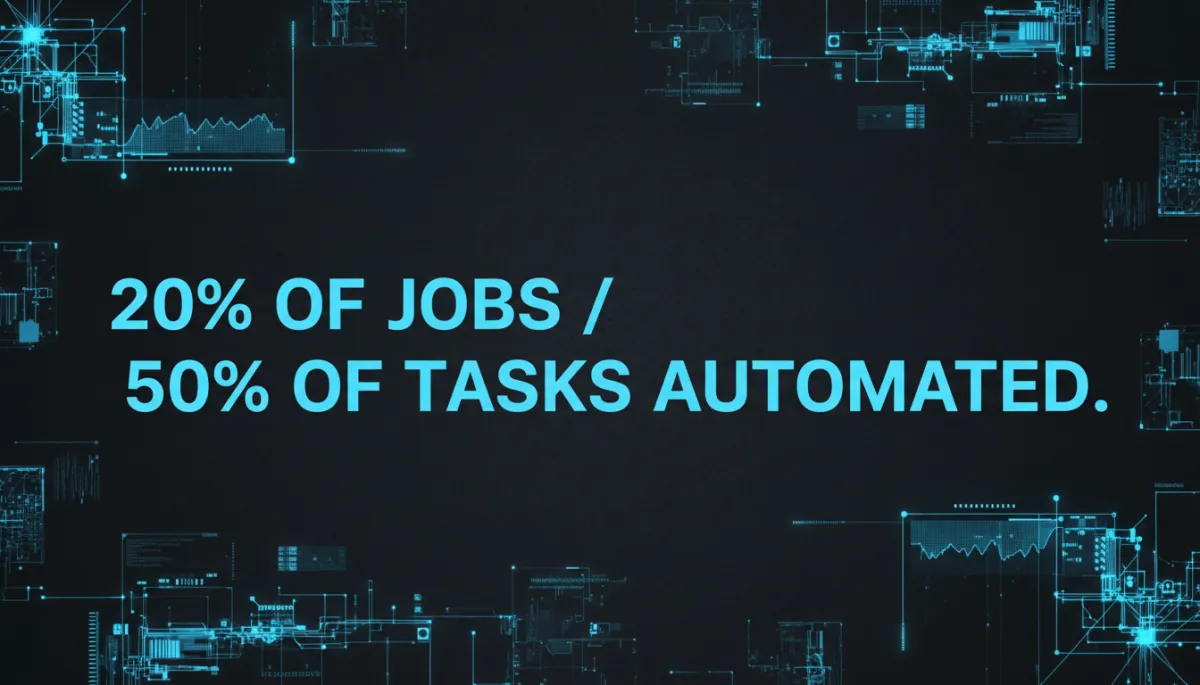
By 2026, analysts estimate that more than 20% of jobs now involve at least 50% task automation, while only around 5% of roles face high displacement risk. The real shift is not about one chatbot replacing one employee; it is about coordinated multi-agent AI teams quietly taking over entire workflows in sales, service, and operations. For SME CEOs, operations managers, and digital transformation leaders, this is no longer a future trend—it is a competitive reality that demands clear strategy and decisive action today, especially around your CRM and customer-facing processes. As you evaluate where to begin, multi-agent AI inside an AI-first CRM is rapidly emerging as the most practical launch pad, setting the stage for broader AI automation across the business.
What Is a Multi-Agent AI System?
A multi-agent AI system is a coordinated network of autonomous software agents that collaborate to complete complex, multi-step tasks. Instead of a single model answering a question, you have a team of AI agents, each with a defined role—such as research, classification, drafting, quality-checking, or decision support—working together under an orchestration layer. Think of it as a digital department made up of specialized virtual colleagues that communicate, delegate, and refine work in real time.
By 2026, multi-agent AI has matured from research labs into production environments across logistics, manufacturing, smart grids, and customer service. Reports from Google Cloud and Deloitte highlight that agentic AI—AI that can plan, act, and coordinate—is now central to enterprise automation strategies. These systems break down complex workflows into manageable subtasks, learn from outcomes, and optimize processes over time, leading to dramatic gains in speed and consistency. For SMEs, the most accessible way to tap into this power is through business applications you already rely on, starting with your CRM and customer engagement stack, which naturally lends itself to agent-driven automation.
As a result, the question is no longer whether multi-agent AI will impact your operations, but where you allow it to embed first—and for many organizations, that entry point is the CRM that orchestrates every customer touchpoint and revenue-critical workflow.
The AI-First CRM: Where Multi-Agent Teams Start
Traditional CRMs were built as systems of record—places where your teams manually entered data after the real work happened. In 2026, the most progressive organizations are shifting to an AI-first CRM model: a system of action where multi-agent AI teams run in the background, updating records, scoring leads, drafting follow-ups, and surfacing insights without constant human input. Forrester and CIO.com both note that around 70% of companies now use AI inside their CRM, and the fastest-growing segment is agentic, autonomous workflows rather than isolated “smart features.”
In an AI-first CRM, you might have:
- An ingestion agent that captures emails, calls, and chat transcripts, then structures and tags them automatically.
- A scoring agent that uses behavioral and firmographic signals to prioritize leads in real time.
- A communication agent that drafts emails, WhatsApp messages, and call scripts tailored to each prospect’s context.
- A QA and compliance agent that checks tone, accuracy, and regulatory constraints before anything is sent.
This orchestration transforms your CRM into the command center of an AI automation 2026 strategy. Whether you are deploying an ai chatbot for business India or rolling out global sales automation, the AI-first CRM becomes the natural home for your first multi-agent AI team, ready to be extended into vertical-specific solutions.
Real Estate CRM in India: Multi-Agent AI for Property Businesses
Nowhere is the impact of multi-agent AI more visible than in real estate CRM India. Property developers, channel partners, and brokerage firms manage thousands of leads across portals, walk-ins, and referrals. Historically, this has meant large call centers, manual follow-up, and fragmented spreadsheets. In 2026, leading Indian real estate firms are using AI-first CRMs with multi-agent teams to handle tasks that once required entire sales and pre-sales departments.
A typical multi-agent setup inside a real estate CRM in India might include:
- A lead classification agent that reads inquiry details, identifies budget, location, and property type, and routes the lead to the right project team.
- A site-visit orchestration agent that proposes time slots, sends confirmations, and manages reminders across SMS, email, and WhatsApp.
- An inventory-matching agent that scans live inventory and recommends units that match each buyer’s preferences and loan eligibility.
- An ai chatbot for business India embedded on your site and portals, capable of answering project FAQs, sharing brochures, and capturing intent 24/7 in multiple languages.
Instead of expanding headcount with every new tower or project launch, property businesses can scale their “digital pre-sales department” via multi-agent AI, while human teams focus on negotiation and relationship building. The same orchestration layer that powers your real estate CRM can be adapted to other relationship-intensive sectors, such as immigration and global mobility services.
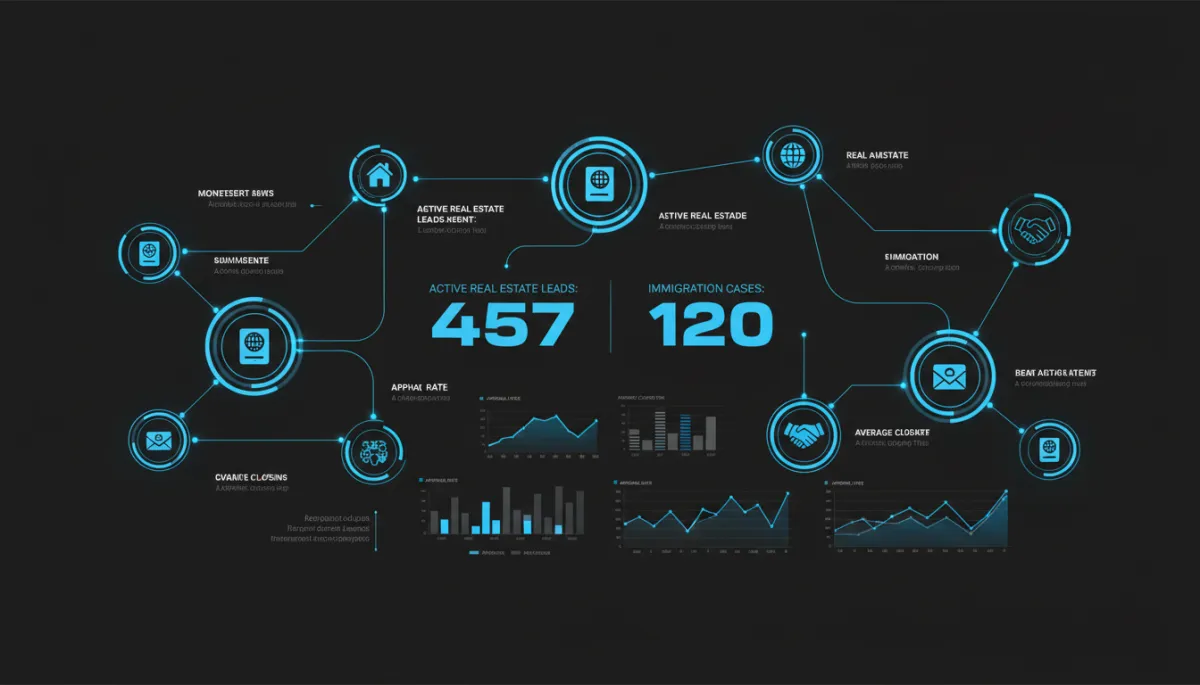
Multi-agent AI turns your CRM into a live operations hub, not a static database.
Immigration CRM Software: AI Agents Handling Visa Consultant Workflows
Immigration and visa consulting is a prime candidate for immigration CRM software powered by multi-agent AI. The work is document-heavy, deadline-driven, and highly procedural—exactly the kind of environment where autonomous agents excel when paired with human oversight. Instead of individual consultants manually chasing documents, tracking country-specific rules, and updating clients, a coordinated AI team manages the bulk of the repetitive load inside your CRM.
Within a modern immigration CRM, you could deploy:
- A document intake agent that validates passports, bank statements, and employment letters for completeness and flags missing or inconsistent data.
- A country-rules agent that monitors immigration website updates and adjusts internal checklists for each visa type automatically.
- A case-progress agent that tracks milestones (lodged, biometrics, medicals, decision) and triggers personalized status updates for clients and internal teams.
- A renewal and upsell agent that predicts when clients may need extensions, PR pathways, or dependent visas, then alerts your consultants with suggested outreach.
With this architecture, immigration CRM software effectively hosts a digital back office that never forgets a deadline and never loses a document, while your human consultants focus on strategy, empathy, and complex edge cases. The same orchestration pattern directly supports the next frontier: always-on, cross-channel lead follow-up for both real estate and immigration firms.
How 24/7 Lead Follow-Up Automation Works Inside a Multi-Agent Team
One of the most common questions SME leaders ask is: “How does 24/7 lead follow-up automation work?” In a multi-agent AI environment, the answer is simple but powerful: different agents own different parts of the follow-up journey, coordinated by rules and learning loops inside your AI-first CRM. Instead of a single bot sending generic emails, you have a small digital sales team working in shifts, across channels, and in multiple languages.
A typical 24/7 follow-up sequence might look like this:
- A capture agent ingests leads from web forms, portals, WhatsApp, and phone systems into your CRM within seconds.
- A profiling agent enriches each lead with location, company, channel, and behavioral data, then assigns an initial score.
- A messaging agent sends a tailored first response—email, SMS, or WhatsApp—aligned with your brand voice and regional regulations.
- An engagement agent monitors replies, opens, and clicks, dynamically adjusting cadence and content to avoid spammy behavior while maintaining responsiveness.
- A handover agent identifies high-intent signals (such as pricing questions or meeting requests) and instantly alerts the right human rep with a summarized context brief.
Over time, these agents learn which sequences convert best for each audience segment, steadily improving performance. This is the practical face of ai automation 2026: not science fiction, but measurable uplift in conversion rates and response times, delivered by orchestrated AI teams that live inside your CRM rather than scattered across disconnected tools.
Building Your Own Multi-Agent AI Team with No-Code Tools
Until recently, building a multi-agent AI system required specialized engineers and significant budgets. In 2026, no-code and low-code platforms mean SME leaders can configure powerful AI teams without writing a single line of code. Modern AI-first CRMs and orchestration layers allow you to define agents, permissions, and workflows through visual interfaces, templates, and drag-and-drop builders—while still enforcing governance and auditability.
A pragmatic roadmap for SME CEOs and operations leaders looks like this:
- Start with CRM. Choose or upgrade to an ai first crm that natively supports agent orchestration and integrates with your website, telephony, and messaging channels.
- Define one high-impact workflow. For real estate CRM India, this might be portal lead follow-up. For immigration CRM software, it could be document collection and status updates.
- Configure a small agent team. Use no-code tools to set up 3–5 agents with clear scopes, guardrails, and escalation paths to humans, including an ai chatbot for business India where relevant.
- Measure and iterate. Track response times, conversion rates, and NPS before and after deployment, then refine prompts, sequences, and routing rules based on real data.
With the right partner, SMEs can stand up a functional multi-agent AI team in weeks, not years. As you gain confidence, you can extend the same orchestration to finance, support, and operations, gradually building an AI-first operating model that keeps you competitive even as larger players accelerate their own automation strategies.
Conclusion: From Experiments to AI-First Operations
Multi-agent AI is not a theoretical concept reserved for tech giants. In 2026, it is the practical engine behind AI-first CRMs, real estate CRM India deployments, and immigration CRM software that quietly replaces repetitive departmental work with coordinated digital teams. For SME CEOs, operations managers, and digital transformation leads, the strategic question is simple: will you allow these AI teams to work for you—or against you, in the hands of your competitors?
The path forward is clear: begin with your CRM, define one or two high-impact workflows, and deploy a focused multi-agent AI team using no-code tools and proven orchestration patterns. From there, extend into 24/7 lead follow-up, document-heavy processes, and cross-channel customer engagement, guided by data and grounded in strong governance. As industry reports from Google Cloud, Deloitte, and Gartner emphasize, organizations that embed agentic AI into their core workflows now will set the pace for the rest of the decade.
If you are ready to understand where multi-agent AI can unlock the fastest wins in your funnel and website experience, start by auditing the digital front door to your business. Get a Free SEO / Website Audit at nexurate.com and uncover the gaps your next AI team should be hired to close.
