
CRM Automation: UK SMEs Embrace AI in 2026
CRM, Sales Automation, UK Small Business
CRM Automation for UK Small Businesses: Why British SMEs Are Replacing Spreadsheets With AI in 2026
For decades, the spreadsheet has been the quiet backbone of UK SME sales management. It’s flexible, familiar, and already paid for. But it’s also the main reason an estimated 70–80% of enquiries never get a proper follow-up — they simply vanish into tabs, inboxes, and handwritten notes. In 2026, CRM automation for small business UK owners is finally fixing this problem permanently, using AI to capture every lead, trigger follow-ups automatically, and show you exactly what’s happening in your pipeline in real time.

The Real Cost of Spreadsheet-Based Sales Management
Leads falling through the cracks — what British businesses are losing
Most owners of 5–100 person firms in trades, professional services, retail, or healthcare will recognise this pattern: enquiries arrive via your website, Facebook, WhatsApp, phone, and referrals. Someone notes them in a spreadsheet, or worse, leaves them in an inbox to “deal with later”. A week passes. Half of those people have already gone with a competitor who replied faster or followed up twice while your team was on-site or in clinic.
Industry surveys suggest that businesses which respond within an hour are up to seven times more likely to convert a lead than those who take a day or more. Yet in practice, UK SMEs often respond after 24–72 hours, if at all. When you rely on spreadsheets, there is no guarantee that every lead is logged, prioritised, and chased. There is no automatic safety net. Every follow-up depends on someone remembering — in between jobs, school runs, and VAT returns.
This is exactly where a modern CRM for UK SME operations is different. It treats every enquiry as an asset with a measurable value, not just a row in a sheet. But before we get to solutions, it’s worth being clear about the full cost of staying as you are.
The hidden cost of manual CRM in staff time and missed revenue
Spreadsheets feel “free” because you already own Excel or Google Sheets. But the real cost sits in admin time and lost opportunities. Consider a small UK clinic or trade firm handling 50–100 enquiries a month:
- A staff member spends 1–2 hours per day copying details from emails, forms, and messages into a sheet, then chasing colleagues for updates.
- Managers spend hours each week trying to build reports manually: who enquired, who converted, and which channels actually work.
- At least one good-quality deal quietly disappears every week because nobody sent a second or third follow-up.
If your average sale is only £300, one lost deal per week is roughly £1,200 per month in missed revenue. Many UK SMEs are losing far more than that, particularly in B2B services and private healthcare. Against that backdrop, investing in CRM automation for small business UK operations stops being a “nice-to-have” and becomes a basic risk-management decision.
What CRM Automation Does That Spreadsheets Can't
Automatic lead capture from all channels (website, email, phone, WhatsApp)
Modern AI CRM for British businesses connects directly to your website forms, Facebook and Google Ads, email inboxes, and even missed phone calls and WhatsApp messages. Instead of relying on staff to copy and paste, every new enquiry is automatically created as a contact and a deal in your CRM. Tools reviewed by TechRadar and other UK outlets highlight this kind of automated lead management as a standard capability for 2026 platforms.
Instant follow-up triggered without human action
Once a lead lands in the system, automation takes over. A text or email goes out within minutes, acknowledging the enquiry and offering the next step — whether that’s booking a call, scheduling a visit, or answering common questions. According to CRM adoption research, SMEs see the biggest gains when they automate these low-judgement, repetitive tasks first, freeing staff to focus on higher-value conversations rather than typing the same reply 20 times a day.
Pipeline visibility — every deal at every stage in one dashboard
In a spreadsheet, your “pipeline” is usually a long list with a few colour codes. In a proper CRM for UK SME teams, you see a visual pipeline: new leads, qualified, quoted, won, and lost — along with values and expected close dates. Leadership teams that use these dashboards regularly are significantly more likely to see strong CRM ROI, with some studies estimating returns of over £8 for every £1 invested when the system is fully adopted.
Automated reminders and task assignment to the right team member
Instead of hoping someone remembers to chase a quote, the CRM can automatically create tasks: “Call Sarah about boiler install quote” or “Follow up with Dr Patel about clinic software demo”. Tasks are assigned to the right salesperson, installer, or practitioner, with due dates and reminders. This is where sales automation UK workflows make a tangible difference: no more sticky notes, no more “I thought you were dealing with that one”.
Real-time reporting — conversion rates, deal values, team performance
Because every interaction is tracked automatically, reporting stops being a monthly headache. In a few clicks, you can see:
- Conversion rate from enquiry to sale by channel (Google, Facebook, referrals, etc.).
- Average deal value by product or service line.
- Individual and team performance, based on follow-ups completed and revenue closed.
This level of lead management UK data simply isn’t practical to maintain in spreadsheets without consuming huge amounts of time or introducing errors.
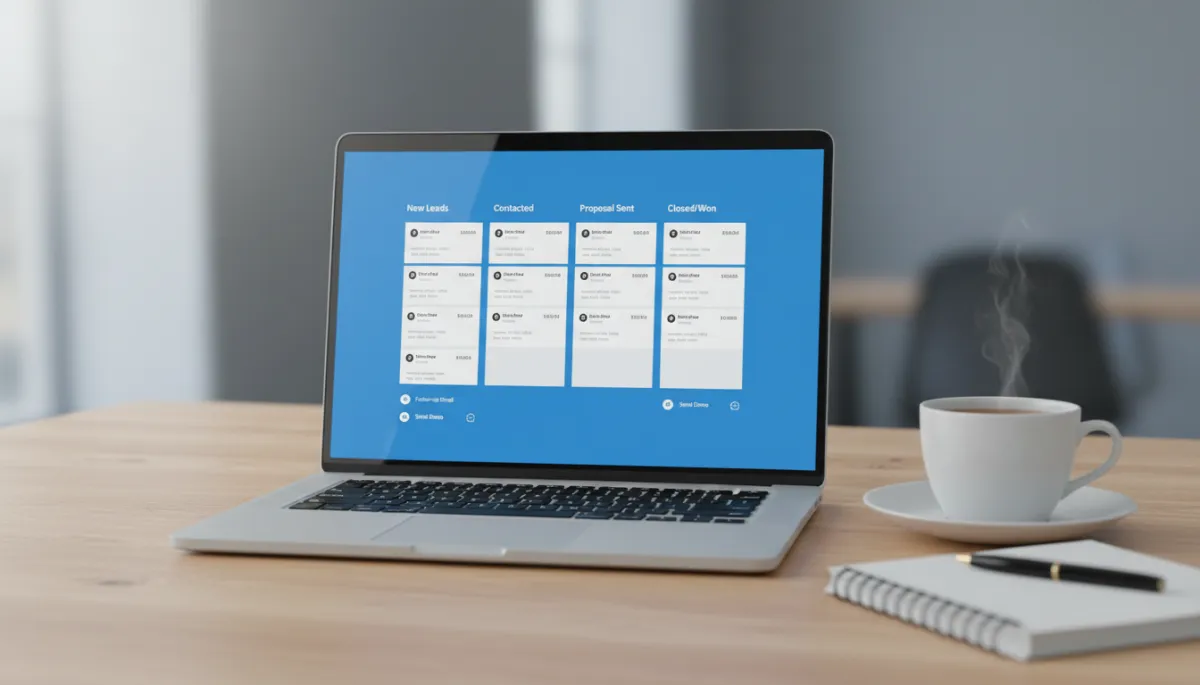
Clear pipeline dashboards help owners spot stalled deals and revenue gaps early.
5 Signs Your UK Business Needs CRM Automation Right Now
Answer honestly. If you say “yes” to three or more of these, it’s a strong signal that you’ve outgrown spreadsheets and should seriously consider CRM automation.
- We regularly find enquiries that were never called, emailed, or messaged back.
- Our “CRM” is a mix of spreadsheets, email folders, and people’s phones.
- I cannot, in under five minutes, see our live pipeline and likely revenue this month.
- We rely on one or two “key people” to remember everything and chase everyone.
- We’re spending money on ads or marketing but can’t clearly link spend to closed deals.
What CRM Automation Costs for a UK Small Business
Let’s talk numbers. Many owners assume CRM means enterprise-level costs. In reality, a focused solution such as Nexurate CRM can start from around $97 (roughly £80) per month for a starter package aimed at small teams. That typically covers core features: contact management, pipeline tracking, basic automation, and reporting.
Compare that to the cost of one missed deal per week. If you lose just four £300 jobs a month through slow or inconsistent follow-up, that’s £1,200 in preventable lost revenue. Even if a CRM automation setup only recovers half of those — two extra deals a month — you’re still generating roughly £600 additional revenue for an £80 spend. That’s before factoring in time saved on admin and clearer insight into which marketing channels actually work.
For context, specialist vertical tools like Nexurate’s NourishBook product for clinics are priced far higher (from $297/month) because they bundle in sector-specific features. A streamlined CRM automation for small business UK setup focused on lead capture and follow-up is typically much more affordable, especially when you factor in the absence of long contracts and the ability to scale up only when needed.
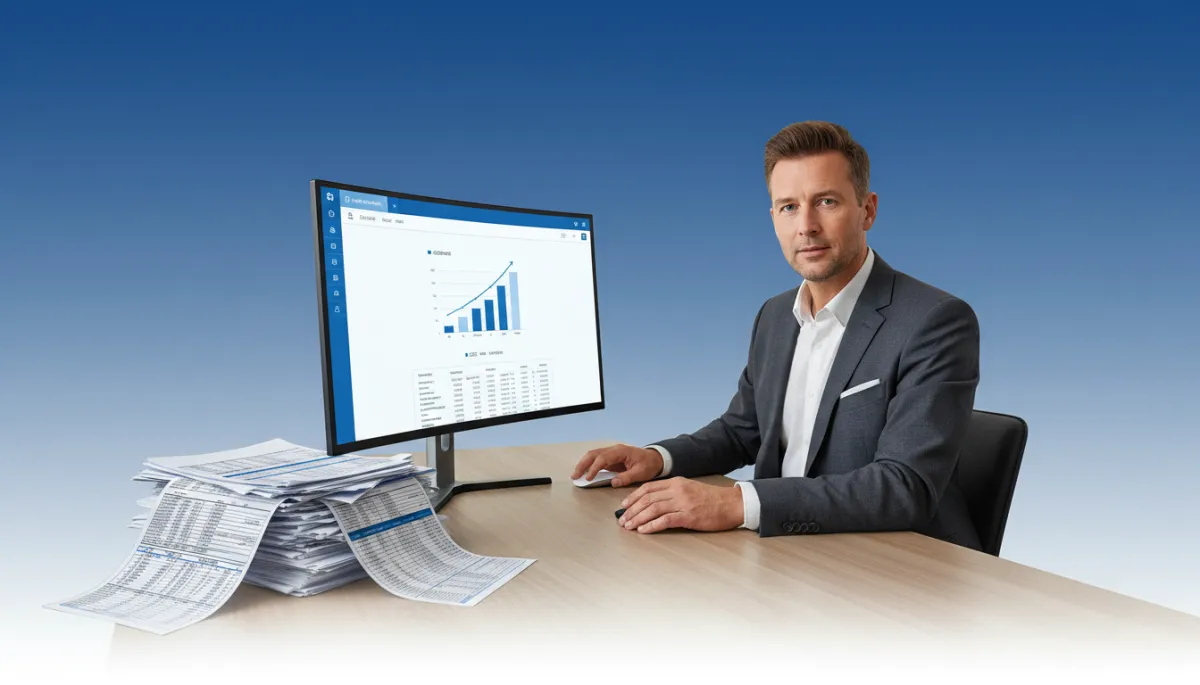
Even one or two extra closed deals a month can more than pay for CRM.
Getting Started With CRM Automation — The 3-Week Plan
Week 1: Connect your lead sources
Start simple. With a platform like Nexurate CRM, you connect your website forms, Facebook and Google Ads, and key email inboxes so every new enquiry lands in one place. Map your existing spreadsheet columns (name, contact details, service, value, stage) into the CRM so nothing is lost. Aim to have at least 80–90% of new leads entering the system automatically by the end of week one.
Week 2: Build your first automation
Next, design one or two core automations that tackle your biggest gaps. For most UK SMEs, that means:
- An instant “thank you, here’s what happens next” message for every new enquiry.
- A follow-up sequence (email, SMS, or WhatsApp) over 3–7 days for people who haven’t yet booked or replied.
This is where sales automation UK tools earn their keep. You’re not trying to replace your team — you’re giving them a system that quietly handles the basics 24/7 so they can focus on the conversations that actually close deals.
Week 3: Set up reporting and refine
Finally, configure a small set of reports you’ll actually look at: total new leads per week, conversion rate, revenue by source, and outstanding tasks. Use these in your weekly team meeting. This is where leadership involvement really matters; when decisions are made using CRM data, adoption follows naturally and the system becomes part of how you run the business, not another piece of software people avoid.
Agencies like Nexurate, who specialise in CRM automation for UK SMEs, typically guide clients through this three-week rollout, ensuring that workflows match your real-world processes rather than forcing you into a generic template.
Book a Free Growth Strategy Session
If you’re still running your sales on spreadsheets and scattered notes, the question isn’t whether you’re losing leads — it’s how many, and how much that’s costing you every month. A modern CRM automation for small business UK setup, powered by AI and built for real-world teams, is now both affordable and fast to implement.
Next step: book a free Growth Strategy Session with Nexurate. In one session, the team will review your current spreadsheets and systems, migrate your core data into Nexurate CRM, and build your first live automation so you can see the impact immediately. No long-term commitment, just a practical demonstration of what’s possible for your business in 2026.
