
Boost Your Business Visibility on ChatGPT
AI Search, Generative Engine Optimization India, GEO SEO India
Your Business Isn't Showing Up on ChatGPT — Here's Why (And How to Fix It)
When did you last search for your own business on ChatGPT or Perplexity — not on Google, but on these AI engines your customers are already using every day?
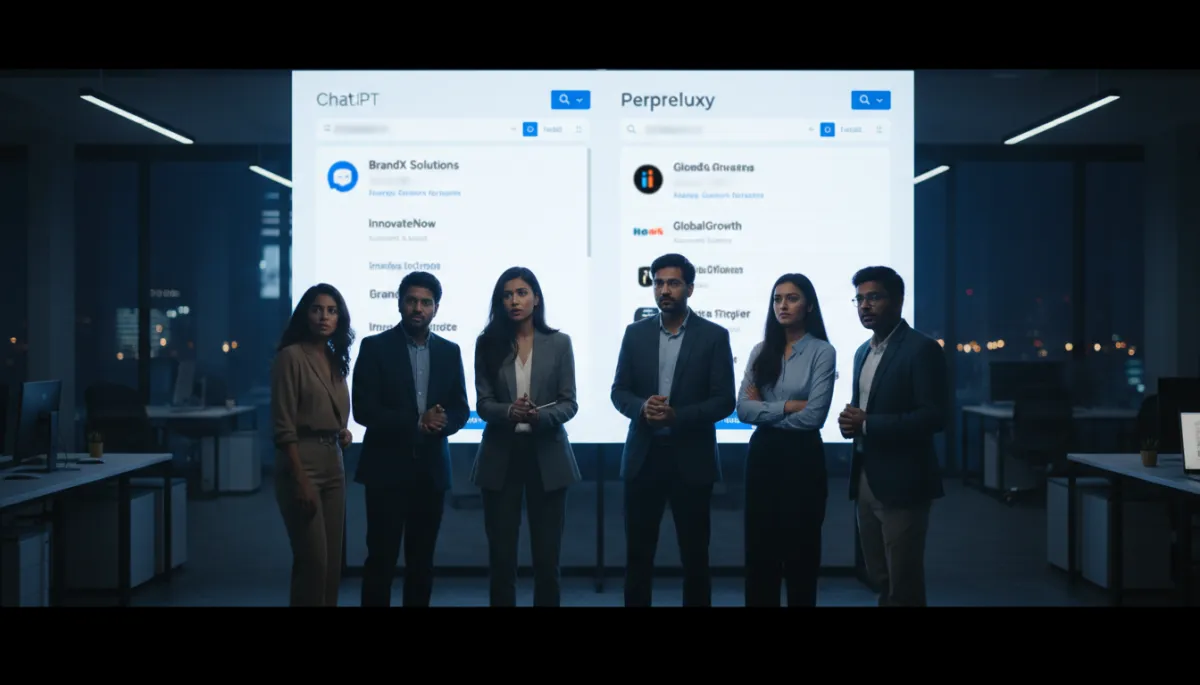
For most Indian business owners and marketing managers, the honest answer is: never. Yet the search landscape has already shifted under your feet. India is now one of Perplexity’s biggest traffic sources, and Google’s AI Overviews are appearing before the first organic result in nearly half of informational searches. If you are only doing traditional SEO, you are becoming invisible where your next customer is quietly looking first.
This is where generative engine optimization India comes in. GEO is the new discipline that decides whether AI engines like ChatGPT, Perplexity, and Google’s AI Overviews cite your business — or pretend you don’t exist.
What Is Generative Engine Optimization (GEO)?
Generative Engine Optimization (GEO) is the practice of shaping your content, brand signals, and technical setup so that generative AI engines can easily understand, trust, and quote you in their answers. Think of it as AI search optimization — instead of fighting for blue links, you are fighting to be the source behind the answer.
How it differs from traditional SEO
Traditional SEO is about ranking a single page for a specific keyword. GEO is about making your entire digital footprint easy for large language models (LLMs) to consume and trust. The focus shifts from:
- Position on page one → to being cited inside AI answers.
- Exact-match keywords → to clear, structured answers and entities.
- On-page tricks → to holistic authority across the web.
GEO SEO India blends LLM SEO, Answer Engine Optimization (AEO), and classic SEO so that when someone asks, “Which is the best logistics company in Delhi for same-day delivery?” the AI doesn’t just give a generic answer — it names you, links to you, and explains why you’re relevant.
Why Google, ChatGPT, and Perplexity surface different results
You may still rank decently on Google and assume you’re safe. But AI engines work differently:
- Google Search ranks individual pages based on hundreds of signals and shows a list of links. AI Overviews then summarise from those and other sources, often stealing the click before users scroll to your result.
- ChatGPT combines its training data with live web browsing (for some versions), favouring clear, authoritative explanations and strong entity signals over pure keyword relevance.
- Perplexity behaves like an AI-first search engine, pulling in multiple citations and ranking them based on source quality, freshness, and topical authority.
That’s why you can rank on Google yet still have zero LLM visibility. The engines are optimising for answers, not just pages.
Why Indian Businesses Are Losing Visibility in AI Search Right Now
Reports show India leading global AI search adoption, with AI-related searches growing over 150% year-on-year. Perplexity’s usage in India has exploded after telecom partnerships, and AI Overviews appear on roughly half of informational queries. Yet most Indian SMEs and even large brands have no GEO strategy at all.
The shift from keyword ranking to citation authority
In AI search, the real currency is citation authority — how often and confidently an engine can quote you as a reliable source. That authority comes from:
- Consistent, expert-level content around a topic (not scattered blog posts).
- Strong mentions and backlinks from other credible websites, media, and forums.
- Clear brand and entity signals across your site, social profiles, and directories.
If your content is thin, generic, or scattered, AI engines simply have no reason to mention you when summarising the market.
How AI engines decide whose content to reference
While each engine is different, three patterns are clear:
- Clarity: Content that directly answers specific questions in simple, structured language is easier for LLMs to quote verbatim.
- Credibility: Engines cross-check your claims against other sources, reviews, and brand signals. Weak or inconsistent data lowers your chances of being cited.
- Coverage: Brands that cover an entire topic deeply — not just one or two keywords — are treated as topical authorities.
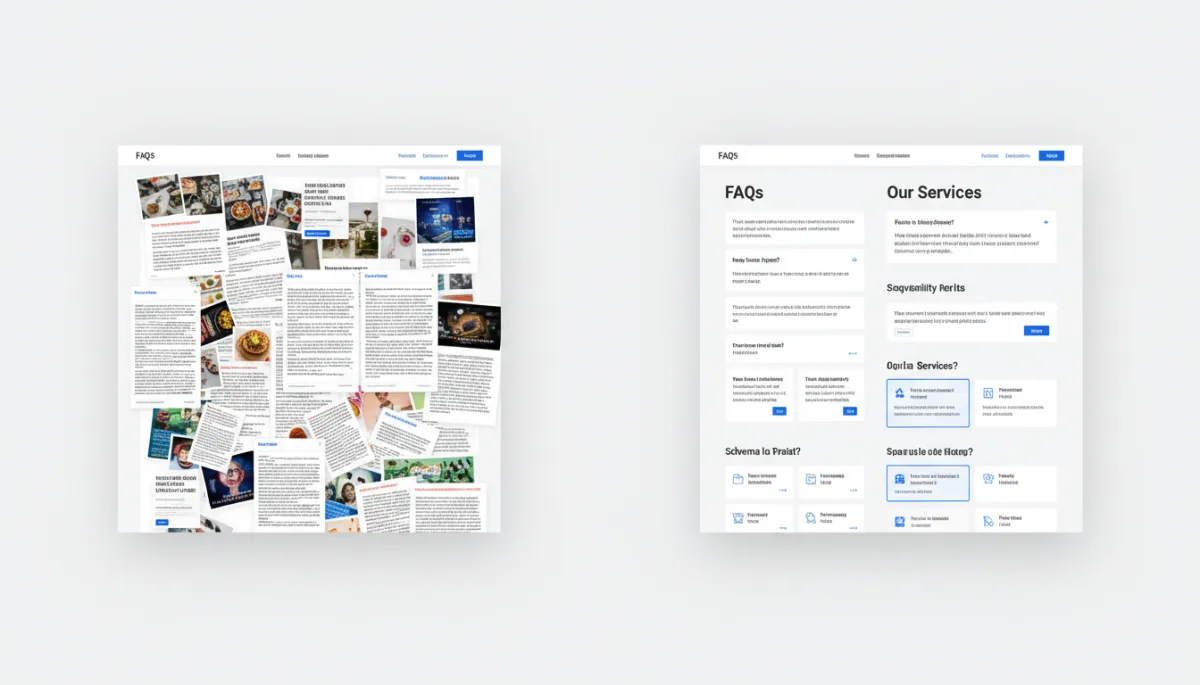
Structured, answer-focused content dramatically increases your odds of AI citations.
5 Proven GEO Strategies to Get Your Business Cited by AI
1. Structure content as clear answers to specific questions
AI engines are built to answer questions, not admire your brand slogans. To improve LLM visibility, rewrite your key pages so they:
- Start with the direct answer in 1–2 crisp sentences.
- Use H2/H3 headings that mirror real questions your buyers ask.
- Include concise FAQs that target “how”, “which”, “best”, and “cost” queries.
If ChatGPT can lift a paragraph from your site and drop it straight into an answer, you are on the right track.
2. Build topical authority with content clusters (not just keywords)
Stop publishing random blogs. Instead, choose 3–5 core money topics and build content clusters around each — pillar pages, detailed guides, case studies, FAQs, and comparison pieces all interlinked. This signals to AI that you are not just “another article”, but a specialist.
For example, a SaaS company in Bengaluru could build a “GST e‑invoicing automation” cluster: overview, implementation guide, industry-specific use cases, pricing breakdown, and troubleshooting. That’s the kind of depth that fuels effective GEO SEO India.
3. Use schema markup and entity-based SEO
LLMs love structure. Schema markup (FAQ, HowTo, Product, Organization, LocalBusiness, Review) turns your content into machine-readable data. Combined with clear entity-based SEO — consistently naming your brand, locations, services, and founders — it helps AI engines connect the dots and treat you as a defined, reliable entity.
You don’t need to become a developer. Modern SEO tools and agencies can generate and implement schema for you, but ignoring it in 2026 is like ignoring mobile optimisation in 2015 — a costly mistake.
4. Get cited and mentioned on authoritative third-party sites
AI engines do not trust what you say about yourself by default. They cross-check you against external sources — media articles, industry blogs, review platforms, directories, and even forums. To boost your Perplexity SEO and overall GEO:
- Secure guest posts and expert quotes on niche Indian and global sites.
- Get listed (properly) on aggregators, SaaS marketplaces, and local directories.
- Encourage customers to leave detailed, keyword-rich reviews on trusted platforms.
Every credible mention is another signal telling AI, “This brand is real, trusted, and relevant.”
5. Maintain an updated, accurate business presence across the web
Inconsistent NAP (Name, Address, Phone), outdated service lists, or conflicting pricing across platforms confuse both humans and AI. For strong AI search optimization:
- Align your website, Google Business Profile, LinkedIn, Justdial, IndiaMART, and other listings.
- Regularly update product features, pricing ranges, and service areas.
- Clean up old or duplicate profiles that send mixed signals.
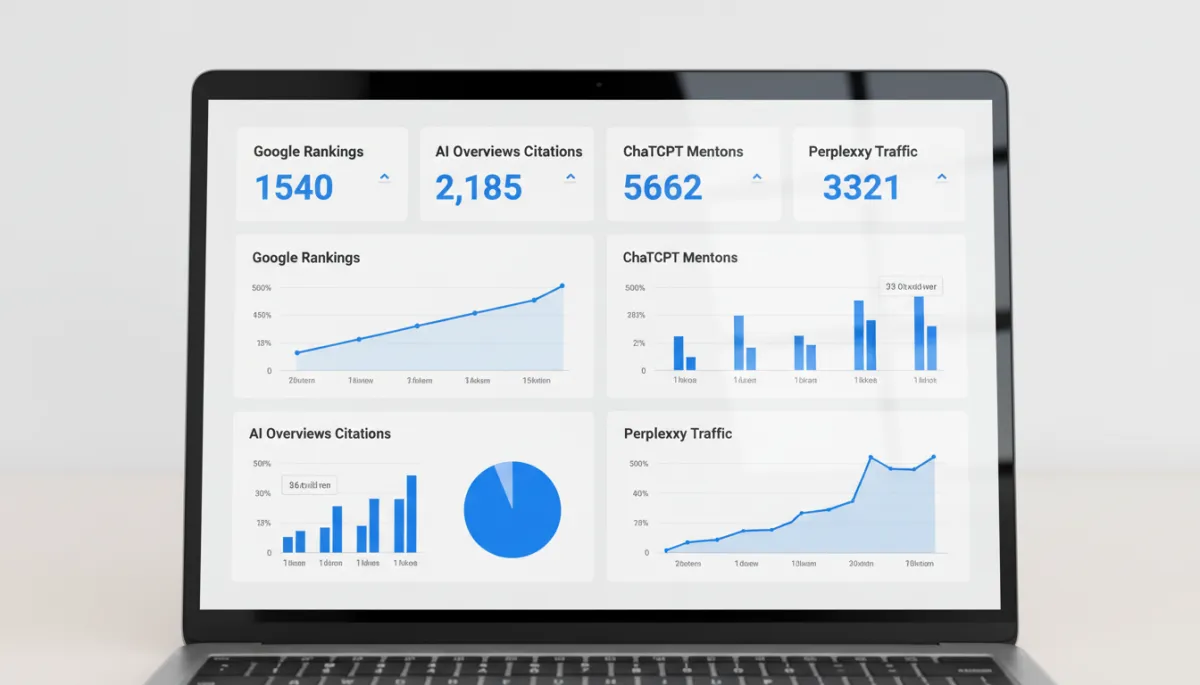
Treat AI visibility metrics as seriously as traditional SEO rankings in 2026.
What This Means for Your Digital Marketing Strategy in 2026
AI search is not replacing Google; it is layering on top of it. That means your future digital marketing strategy must treat SEO and GEO as two sides of the same coin:
- Technical SEO keeps your site crawlable, fast, and indexable by search engines and AI crawlers.
- GEO ensures your content is answer-ready, structured, and authoritative so LLMs actually use it.
Indian businesses that adapt early will capture an unfair share of AI-driven discovery — especially in high-intent B2B, healthcare, education, finance, and D2C niches where users increasingly ask AI before they ask Google.
How Nexurate Helps You Build AI-Ready Content Authority
Most teams don’t have the time or expertise to reverse‑engineer AI engines while running campaigns, managing sales, and hitting quarterly targets. That’s where Nexurate comes in. We specialise in SEO services and content marketing that are built from day one for GEO SEO India.
Our approach is brutally practical:
- Audit where (and if) your brand appears in ChatGPT, Perplexity, and AI Overviews today.
- Map your current content to real buyer questions and identify gaps AI engines are filling with competitors.
- Build content clusters, schema, and external citations that quickly raise your AI citation authority.

A focused GEO roadmap turns AI search from a threat into a growth channel.
Book Your Free GEO Growth Strategy Session
The uncomfortable truth is this: if you don’t optimise for AI search in 2026, your competitors will happily take your visibility — and your revenue. You cannot afford to wait until leads drop to zero before reacting.
Nexurate is offering a limited number of free Growth Strategy Sessions for Indian businesses serious about staying ahead. In this session, we will:
- Audit your current AI search visibility across ChatGPT, Perplexity, and Google AI Overviews.
- Identify quick‑win GEO opportunities you can execute within 60–90 days.
- Outline a practical, budget‑aligned GEO + SEO roadmap tailored to your market.
If you’ve been wondering how to rank on ChatGPT, how to appear in Perplexity’s citations, or how to future‑proof your digital marketing strategy, this is your moment to act — before AI quietly routes your next customer somewhere else.
Meta Title: Your Business Isn’t Showing Up on ChatGPT — Generative Engine Optimization India Guide
Meta Description: Indian businesses are losing visibility on ChatGPT, Perplexity, and Google AI Overviews. Learn how generative engine optimization India (GEO SEO India) boosts AI search optimization, LLM visibility, and revenue in 2026.
