AI Agents for Digital Marketing: How to Turn Website Traffic Into Revenue Automatically in 2026
AI Agents for Digital Marketing: How to Turn Website Traffic Into Revenue Automatically in 2026
Most digital marketing strategies have the same leak: traffic arrives, but a significant portion of it never converts into a qualified lead. Visitors browse a service page, read a blog post, or click an ad — and then leave without filling a form, sending a WhatsApp message, or making a call.
AI agents for digital marketing solve this problem at scale. Instead of passively waiting for visitors to take action, AI agents proactively engage, qualify, capture, and follow up — converting more of your existing traffic into pipeline without increasing your ad budget or your team size.
What Are AI Agents for Digital Marketing?
AI agents for digital marketing are autonomous AI systems that perform specific marketing and sales tasks independently — without requiring a human to trigger each action. Unlike traditional automation that follows fixed rules, AI agents can reason, adapt, and take sequential actions to achieve a defined goal.
In a digital marketing context, an AI agent might detect that a website visitor has viewed a pricing page three times and initiate a WhatsApp conversation proactively; qualify an inbound lead from a Facebook Ad through a structured chatbot conversation and route it to the appropriate sales pipeline stage within minutes of the ad click; follow up with a cold lead after 14 days of inactivity with a personalised message based on their original enquiry topic; or transcribe and analyse a sales call, update the CRM record, and trigger the next follow-up action.
How AI Agents Are Different from Traditional Marketing Automation
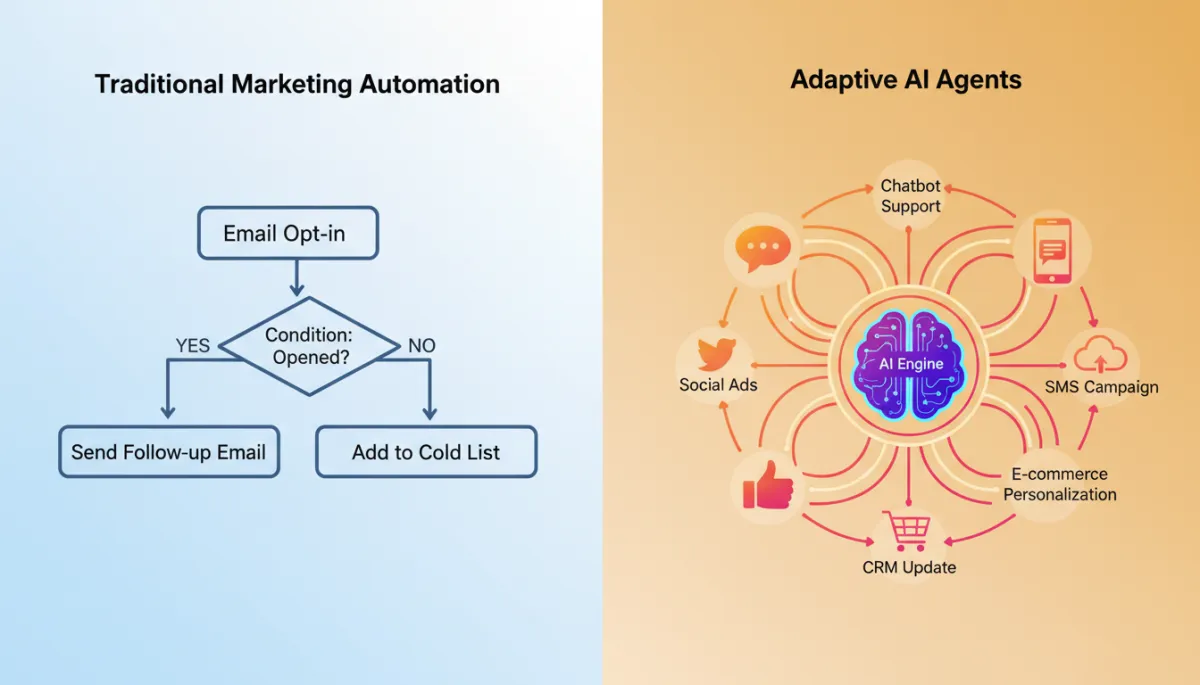
Traditional marketing automation follows rules. AI agents pursue outcomes.
A traditional automation workflow is: if a contact opens this email, send this follow-up after 3 days. It cannot adapt if the contact's situation changes or if a different approach would convert better.
An AI agent understands context, adjusts its approach based on what it learns, and takes a sequence of actions across multiple tools and channels to achieve the goal. This distinction matters enormously for digital marketing performance — AI agents convert traffic that traditional automation misses entirely.
AI Agent Use Cases in Digital Marketing
Converting Website Traffic Into Pipeline
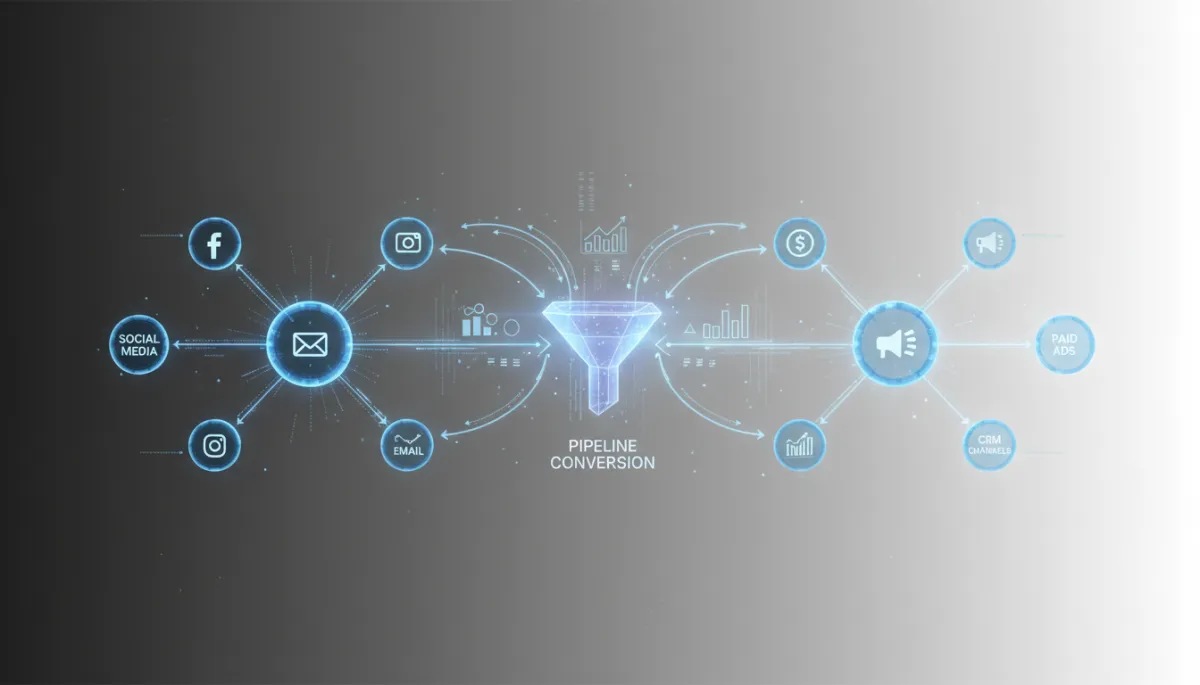
The typical website converts 1 to 3 percent of visitors into leads. AI agents can significantly improve this by triggering a proactive chat when a visitor scrolls more than 70% of a service page, offering a specific resource relevant to the page being viewed, engaging visitors who are about to exit with a targeted message, and qualifying the visitor through a structured conversation while creating a CRM lead record automatically.
Lead Qualification at Scale
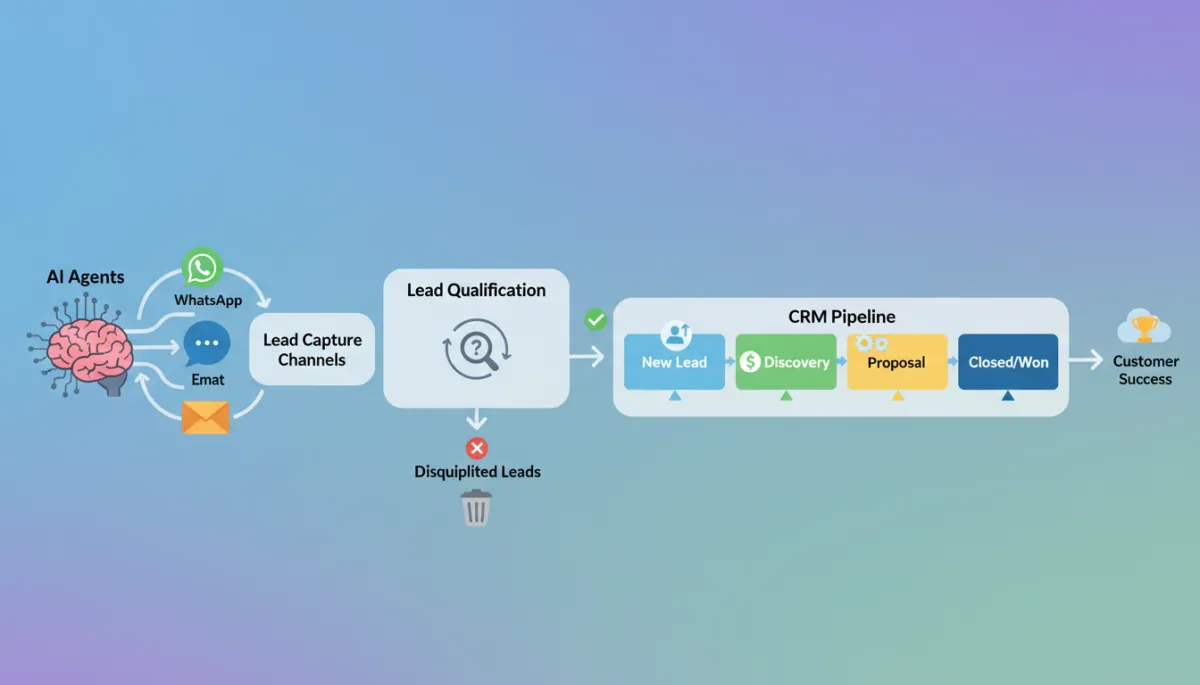
When leads arrive from paid ads, organic search, or social media, AI agents qualify them instantly through WhatsApp or website chat — asking the questions your sales team would ask, capturing the answers in your CRM, and routing leads based on intent score. High-intent leads trigger immediate human escalation. Lower-intent leads enter automated nurture sequences.
Multi-Channel Follow-Up
AI agents orchestrate follow-up across email, WhatsApp, and SMS based on lead behaviour — not just time. A lead that opens an email but does not click receives a different follow-up than one that clicks but does not book. An agent adapts the sequence based on what it observes about each lead's engagement.
Sales Automation — The Last Mile of Conversion
AI agents support sales automation by flagging leads that show buying signals, preparing call briefs for sales reps before conversations, logging call outcomes to the CRM, triggering the appropriate post-call follow-up based on the conversation outcome, and nudging deals that have stalled in the pipeline.
AI Automation Services: What to Expect from Implementation
Implementing AI agents for digital marketing involves three layers:
Data and channel integration — Connecting your marketing channels to your CRM so every lead source is tracked and every lead is captured automatically.
Agent design and configuration — Defining the goals and behaviours of each AI agent: what triggers them, what questions they ask, what data they capture, and what actions they take.
Optimisation and iteration — Monitoring agent performance, identifying where leads are dropping off, and refining agent behaviour to improve conversion rates over time.
Measuring the ROI of AI Agents in Digital Marketing
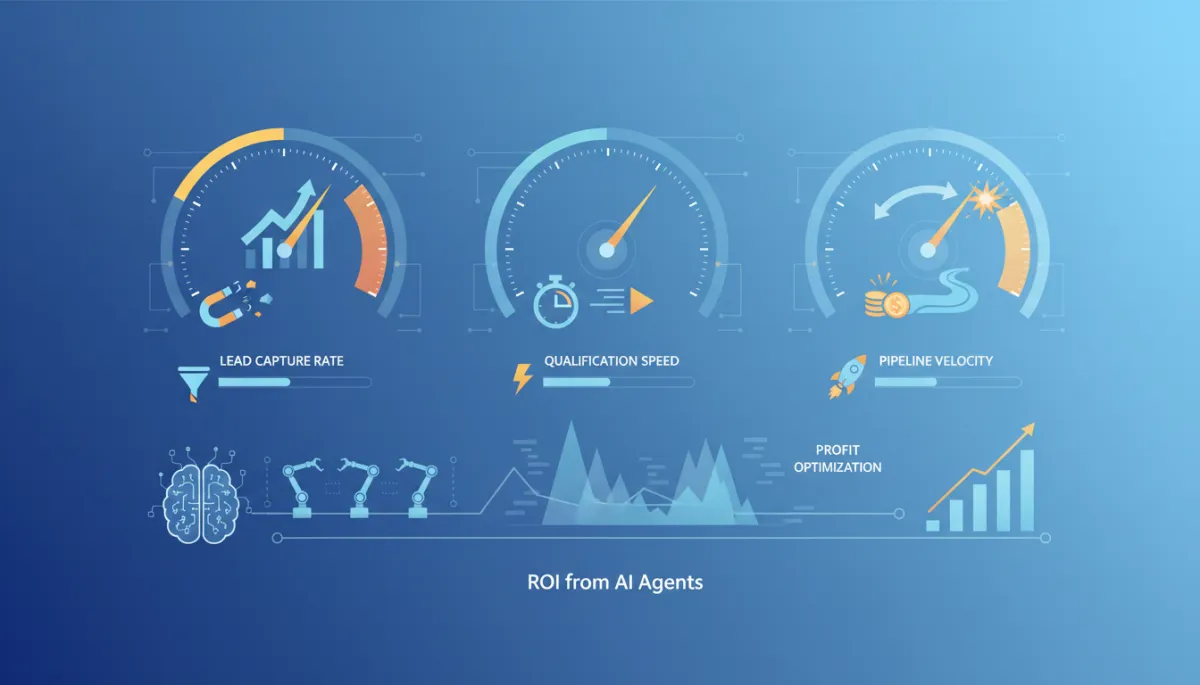
Lead capture rate — What percentage of traffic is now converting to a captured lead?
Qualification speed — How quickly are leads being qualified after initial contact?
Follow-up consistency — Are 100% of leads receiving a structured follow-up sequence?
Cost per qualified lead — Is AI qualification reducing the cost of delivering a sales-ready lead?
Pipeline velocity — Are deals moving through the pipeline faster with AI-assisted nurturing?
Frequently Asked Questions About AI Agents for Digital Marketing
What are AI agents for digital marketing?
AI agents for digital marketing are autonomous AI systems that perform marketing and sales tasks independently — including lead capture, qualification, follow-up, and CRM updates — without requiring a human to trigger each action.
How is an AI agent different from a chatbot?
A chatbot follows a fixed script. An AI agent pursues a goal — adapting its approach based on context, reasoning through multi-step processes, and taking actions across multiple tools and channels to achieve an outcome.
What is AI that converts traffic into pipeline?
AI that converts traffic into pipeline refers to systems that proactively engage website visitors and inbound leads, qualify them through intelligent conversations, capture their data in a CRM, and route them into the appropriate follow-up sequence.
What AI automation services does Nexurate provide?
Nexurate provides end-to-end AI automation services including CRM setup, AI chatbot deployment, WhatsApp automation, lead scoring, automated follow-up sequences, AI voice agents, and sales pipeline automation for small and medium businesses.
How long does it take to see results from AI agents?
Most businesses see measurable improvements in lead capture and response speed within 30 days of AI agent deployment. Full pipeline conversion improvements typically become visible within 60 to 90 days.
The Bottom Line — Traffic Without Conversion Is Wasted Spend
Every visitor who arrives on your website and leaves without becoming a lead is ad spend, SEO effort, and brand investment that produced no return. AI agents for digital marketing close the gap between traffic and pipeline — systematically, continuously, and at a scale no human team can match.
Get a Free SEO / Website Audit — We'll analyse your current traffic and lead conversion rates and show you exactly how AI agents could turn more of your existing traffic into qualified pipeline. Visit nexurate.com
