7 Reasons Your Leads Are Going Cold Before Your Sales Team Ever Sees Them
7 Reasons Your Leads Are Going Cold Before Your Sales Team Ever Sees Them
You are spending money on ads. Your website is getting traffic. People are filling out your forms, calling your number, sending WhatsApp messages. And then — nothing. By the time your sales team picks up the lead, they get a voicemail or a polite "I already went with someone else."
The problem is not your product. It is not your pricing. It is the gap between when a lead enters your pipeline and when a human actually reaches out — and all the friction that exists in between.
Here are the seven most common reasons leads go cold before your sales team ever sees them — and exactly how AI CRM automation closes every one of those gaps permanently.
Why Do Leads Go Cold? The Speed-to-Lead Reality in 2026
Lead intent is perishable. A prospect enquiring about your service is at peak motivation the moment they submit that form, make that call, or send that WhatsApp message. Every minute that passes reduces the probability they will still be interested when someone finally reaches out. Research consistently shows that contacting a lead within the first five minutes of enquiry is dramatically more effective than contacting them an hour later. Most businesses fail at this not because they do not care — but because their systems are not built for speed.
Reason 1: Your Lead Capture System Has Blind Spots
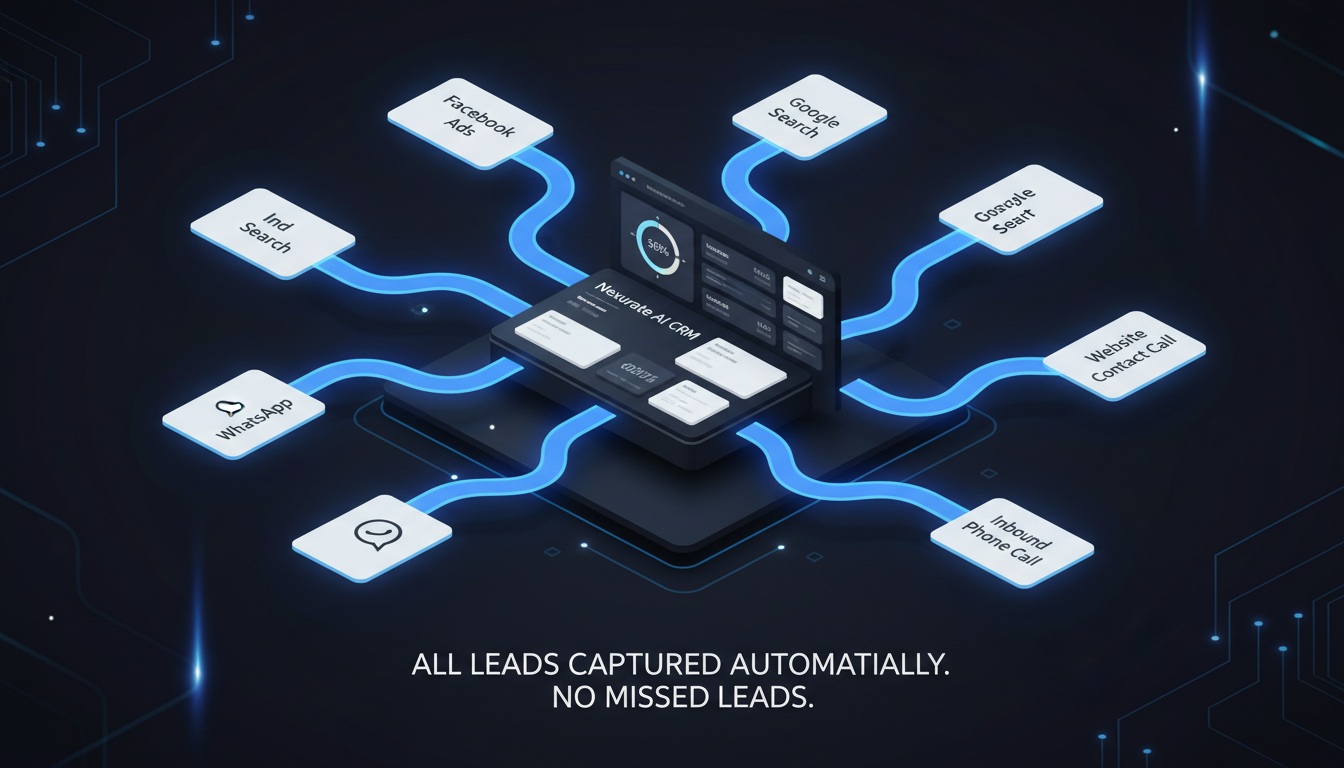
The single biggest reason leads go cold is that they never fully enter your pipeline. Most businesses receive enquiries from multiple channels simultaneously — website forms, Facebook Ads, Google Ads, WhatsApp messages, inbound calls, Instagram DMs, referrals — but have no centralised system that captures all of them in one place.
A lead from a Facebook Ad lands in one inbox. A WhatsApp enquiry sits on a phone. A missed call goes to voicemail with no automatic follow-up. By the time your team sees the lead, hours have passed — or the enquiry was never logged at all.
The AI fix: An AI CRM captures leads automatically from every channel and creates a unified contact record in real time, regardless of where the enquiry originated.
Reason 2: There Is No Instant Response System
Even when a lead is captured, most businesses have no mechanism for an immediate response. Your team is in a meeting. It is after hours. The form was submitted at 9:30 PM on a Friday.
Here is the competitive reality: your leads are comparing multiple options at the same time. A competitor who responds within 60 seconds — even with a well-crafted automated message — is already ahead in that buyer's mind. An AI-powered WhatsApp response that acknowledges the enquiry and begins a qualification conversation runs around the clock, costs nothing per interaction once configured, and works at 3 AM on a public holiday.
The AI fix: Automated instant-response workflows trigger the moment a lead is captured — sending a WhatsApp or SMS acknowledgement within 60 seconds, 24 hours a day, 7 days a week.
Reason 3: Leads Are Not Being Qualified Before They Reach Your Sales Team
When every lead hits your sales team unfiltered, one of two costly things happens. Either your team spends time on leads that were never going to convert, or genuinely high-intent prospects get buried under a pile of low-quality enquiries and never receive proper follow-up.
Without an AI qualification layer, every lead appears equally urgent — and none receives the right level of attention at the right time.
The AI fix: An AI chatbot qualifies every inbound lead before it reaches a human. It captures what your team needs to know — budget, service interest, timeline, location — and routes high-intent leads for immediate follow-up while lower-intent enquiries enter an automated nurture sequence.
Reason 4: You Have No Lead Scoring System
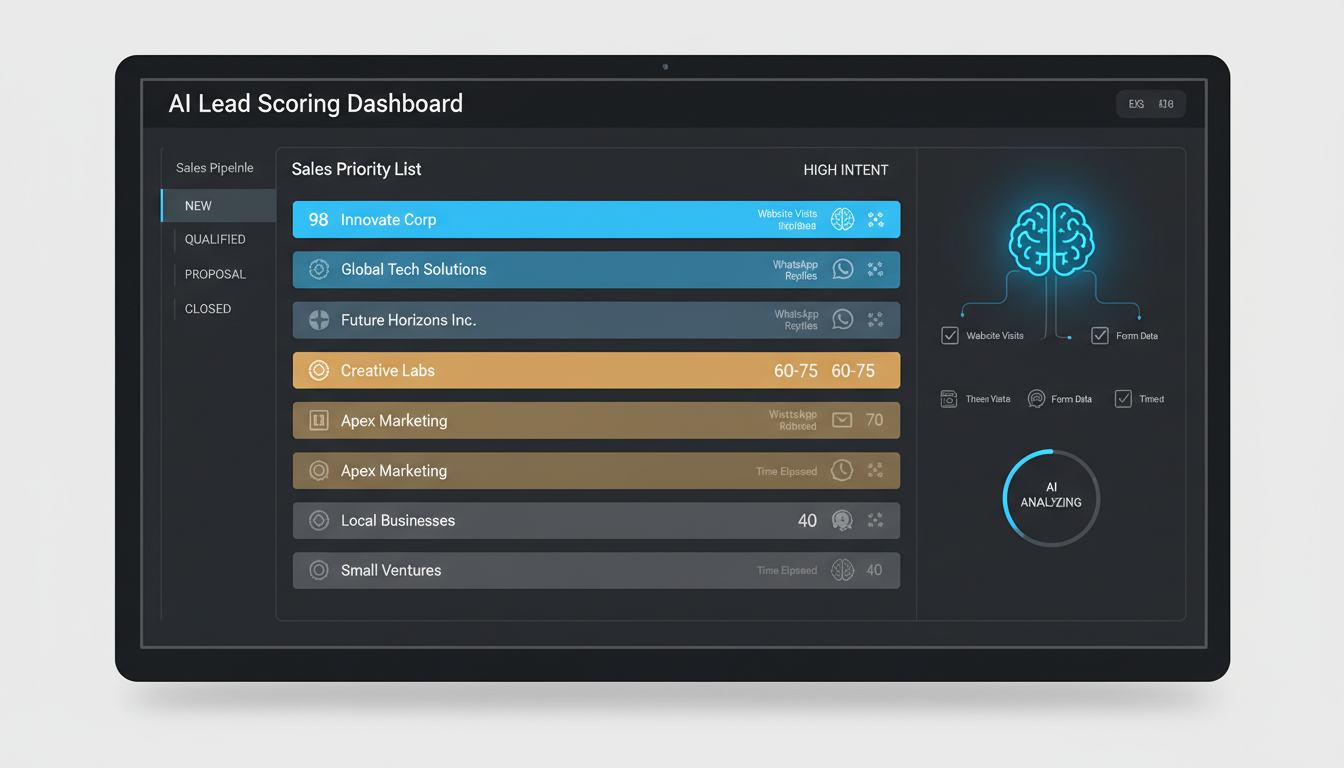
If you are not scoring leads, you are processing them in arrival order — not in conversion-likelihood order. This is one of the most expensive inefficiencies in any SME sales pipeline.
A high-intent lead who visited your pricing page three times, clicked your WhatsApp link, and submitted a detailed enquiry form gets the same follow-up priority as someone who clicked an ad by accident. Without data, your team cannot know the difference. Without AI, that data does not exist.
The AI fix: AI lead scoring continuously evaluates every contact based on engagement behaviour, qualification responses, source channel, and interaction history — giving your sales team a ranked list of who to call first, updated in real time.
Reason 5: After-Hours Enquiries Have No Follow-Up Path
In India and across Southeast Asia, evening and weekend enquiries are not edge cases — they are often the majority. Customers research services after dinner, late at night, on Saturday mornings. Forms submitted at 10 PM. WhatsApp messages sent at 7 AM on Sunday.
If your follow-up process only runs during office hours, you are systematically missing the highest-intent enquiry windows in your market. These leads do not wait until Monday. They call the next business that responded.
The AI fix: Automated follow-up sequences run continuously — capturing every lead regardless of when they arrive, initiating AI qualification conversations, booking appointments directly into your calendar, and routing high-intent leads to your team the next morning with full context already captured.
Reason 6: There Is No Nurture Sequence for Leads That Do Not Convert Immediately
Most businesses treat a lead that does not convert in the first contact as a lost cause. In reality, most service buying decisions — particularly in healthcare, real estate, professional services, and education — take days, weeks, or even months. A prospect who said "I'll think about it" in week one may be ready to commit in week three. But only if you stayed visible.
Without a structured nurture sequence, your team must remember to follow up manually with every unconverted lead — which does not happen consistently when the pipeline is active.
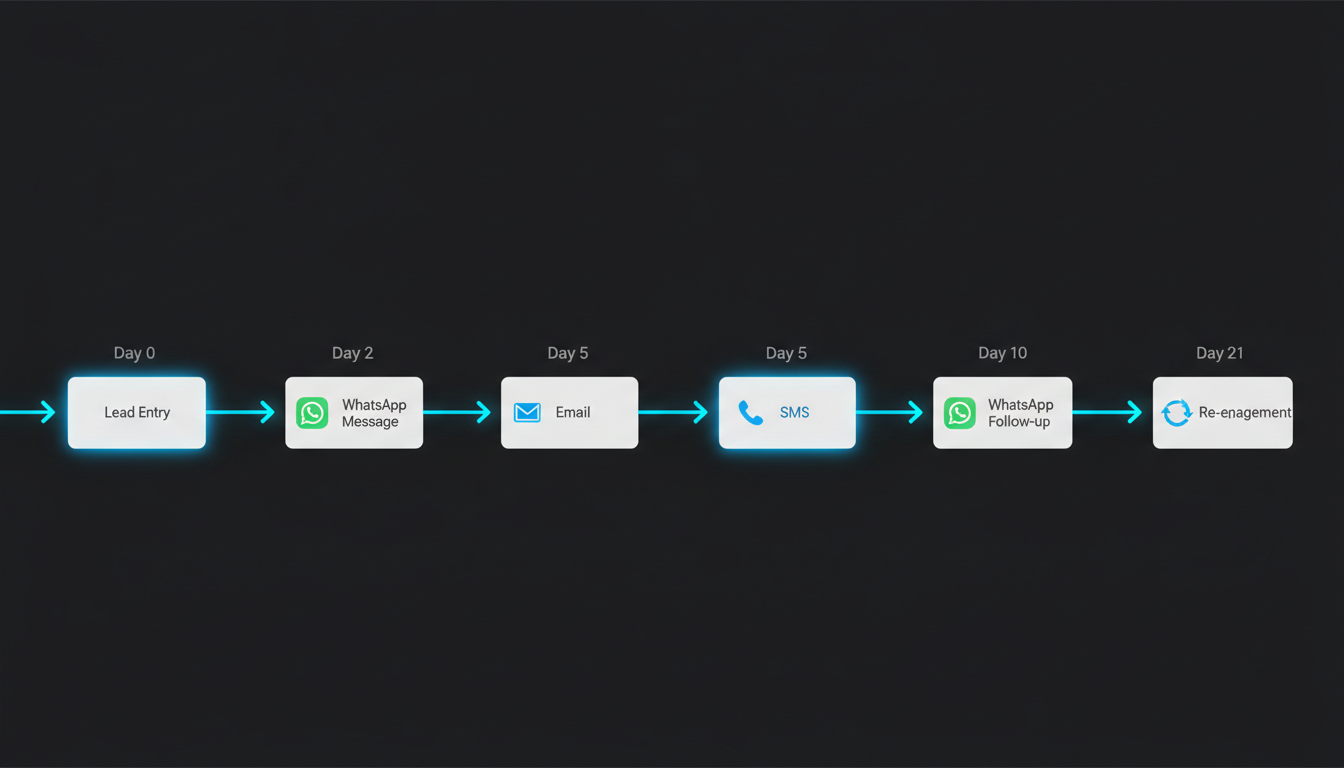
The AI fix: Pre-built nurture sequences deliver relevant WhatsApp messages, emails, and SMS follow-ups at defined intervals after initial contact — keeping your business present, delivering value, and prompting re-engagement at the right moment in the buyer's decision cycle.
Reason 7: Your Pipeline Has No Visibility
If you cannot see exactly where every lead sits in your sales process, you cannot manage it. Leads fall through the gaps not because your team forgot — but because no system flagged that the lead existed and had not been contacted.
Without pipeline visibility, there is no way to identify which leads have had zero contact in seven days, which high-scoring leads were qualified but never followed up on, or which nurture sequences stopped delivering results. You cannot optimise what you cannot measure.
The AI fix: An AI CRM provides a live pipeline dashboard showing every lead, their current stage, their engagement history, and the next scheduled action. Stalled leads are automatically flagged. Re-engagement workflows trigger when leads go quiet beyond a defined threshold.
Frequently Asked Questions About Why Leads Go Cold
Why do leads go cold before a salesperson calls them?
Leads go cold primarily because of slow response times, no immediate follow-up automation, and no qualification layer to identify and prioritise high-intent contacts. Every minute between enquiry and first contact reduces conversion probability significantly.
How does AI CRM stop leads from going cold?
AI CRM prevents cold leads by automating the entire first-contact and nurture process — capturing leads instantly from every channel, sending immediate automated acknowledgements, qualifying prospects through chatbot conversations, scoring by intent, and running follow-up sequences that operate 24/7 without manual intervention.
What is the ideal response time for a new lead?
The ideal response time is within 60 seconds of initial contact. An automated WhatsApp or SMS message within this window keeps the lead engaged while your team prepares for a detailed follow-up conversation.
How long does it take to see results from AI CRM automation?
Most businesses see measurable improvement in lead response speed within the first week of deployment. Conversion improvements — particularly from leads that previously went cold — typically become visible within 30 to 60 days.
Fix Your Lead Pipeline Before It Costs You Another Week of Revenue
Every reason your leads are going cold has a specific, deployable fix. The question is whether you know which gaps are affecting your business most — and how much revenue they are costing you every week.
Get a Free SEO / Website Audit — We will review your entire lead capture and follow-up process, identify exactly where leads are dropping off, and map how AI automation can close every gap. Visit nexurate.com
